


A Forest of Hidden Lives: Discovering Gigaquit’s Remarkable Wildlife

Deep in the forests of Surigao del Norte, scientists have discovered a rich world of
frogs, snakes, and lizards living alongside the endangered Philippine Eagle. But a
recent forest fire has raised new concerns about th
e future of this important wildlife
refuge.
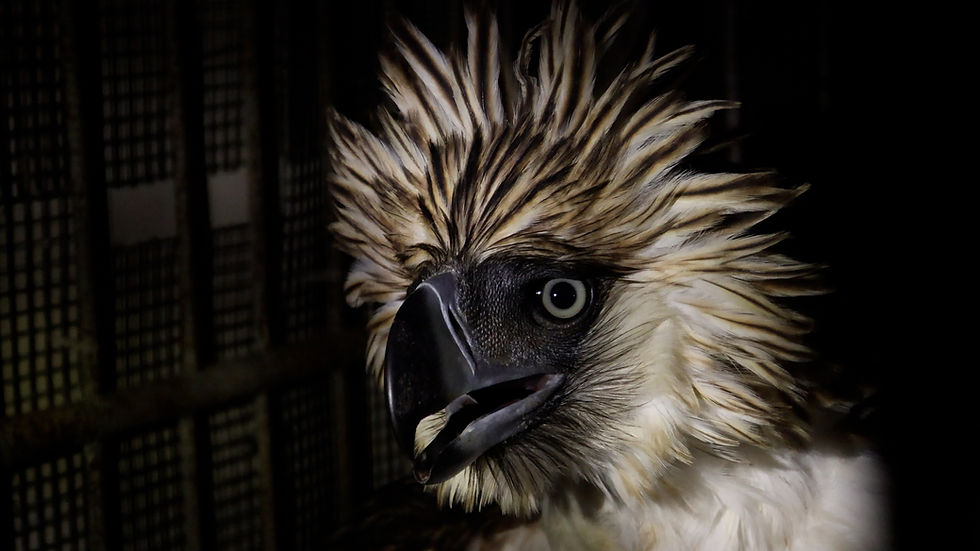
GIGAQUIT, Surigao del Norte, Philippines — High in the forests of Gigaquit, a Philippine Eagle nest once raised hope for the future of its species. In 2025, conservationists confirmed an active nest in the area, showing that these forests remain an important home for one of the world’s rarest birds of prey.
But beneath the trees, another world was waiting to be discovered.

Mindanao Splash Frog (Staurois natator)
A Mindanao Splash Frog rests within its streamside habitat. Species that depend closely on clean forest waterways can offer a glimpse into the condition of the surrounding ecosystem.
Frogs hide along forest streams. Lizards climb tree trunks. Snakes move quietly through shrubs and fallen leaves. Many of these animals are found nowhere else on Earth.
A new scientific study has revealed just how special this forest is.
Researchers from the Philippine Eagle Foundation (PEF), University of the Philippines Mindanao, and San Pedro College surveyed the Baoy Watershed, part of the Mt. Hilong-Hilong Key Biodiversity Area, in 2022 and 2024.

Southern Philippine False Gecko (Pseudogekko pungkaypinit)
A Southern Philippine False Gecko blends into the vegetation of Gigaquit’s forest. Its camouflage reflects the close relationship many small forest species have with the microhabitats around them.
They recorded 47 kinds of amphibians and reptiles: 17 frogs, 18 lizards, and 12 snakes. Of these, 32 are found only in the Philippines, including 16 unique to the Greater Mindanao region.
The study also added 38 new provincial records

Philippine Ground Snake (Stegonotus muelleri)
The Philippine Ground Snake is easily overlooked among leaf litter and low vegetation—one of many less-visible animals sharing the forest with larger and more familiar wildlife.
Among the animals recorded were the Philippine Ground Snake, Southern Philippine False Gecko, and Mindanao Splash Frog.
Published in the Philippine Journal of Science in August 2026, the study shows that the forests of Gigaquit protect far more than the Philippine Eagle.
“Every survey helps us understand more about the wildlife living in these forests,” said Andrei Von Mariano C. Tirona, the study’s senior author and a Biologist at PEF. “The more we learn, the better we can protect them.”
When fire reaches the forest
But this remarkable home for wildlife is under threat.
Forest clearing, charcoal production, illegal logging, and hunting continue to put pressure on the Baoy Watershed.

Aftermath of the forest fire.The fire-scarred landscape shows how quickly flames can alter vital wildlife habitat, affecting areas used for shelter, feeding, and movement.
Then, in September 2026, a forest fire swept through Philippine Eagle habitat in Gigaquit, destroying a nest used in December 2025. Initial reports suggested that more than 100 hectares were affected, although the final extent of the fire remains to be confirmed.
Firefighters, forest guards, and local responders worked to control the flames. Heavy rains eventually helped contain the fire.

Forest fire burnt an eagle’s nest, but conservation partners in Gigaquit teamed up to protect the rest of the nesting territory.
For the Philippine Eagle, losing a nesting tree is a serious blow. But the new study suggests that the fire may have harmed many other species sharing the same forest.
“Losing this nest is a heartbreaking loss. For generations, Philippine Eagles have used these old nesting trees to lay their single egg and raise their young. Losing one means losing a home for future generations of eagles. But the damage goes beyond the Philippine Eagle. This study shows that the same forest is home to many rare frogs, snakes, and lizards found nowhere else on Earth. The fire may have destroyed their homes, too. When we lose a forest, we risk losing an entire world of wildlife,” said Dr. Jayson C. Ibanez, PEF Director for Operations and co-author of the study.
For Gigaquit Mayor Chandru Bonite, these remarkable discoveries further strengthen the municipality’s commitment to protecting and preserving the Baoy Watershed, one of Gigaquit’s most precious natural treasures.
“What fascinates us is that the same Baoy Watershed we are protecting for our people and the majestic Philippine Eagle is also home to these remarkable frogs, snakes, and lizards. These discoveries remind us that our forests hold extraordinary treasures of biodiversity, some of which are only now being revealed to us,” Mayor Bonite said.
“Protecting the Baoy Watershed is not merely about conserving our forests and wildlife. It is about safeguarding our water sources, preserving the delicate balance of nature, and securing a sustainable future for the next generations. Every species that thrives in our forests is a testament to the richness of Gigaquit’s natural heritage and a reminder of our responsibility to protect it.”
The mayor also expressed his heartfelt appreciation to the local firefighters, forest guards, and community volunteers who bravely responded to the forest fire, recognizing their dedication and sacrifices in protecting the watershed.
To strengthen the municipality’s conservation efforts, the local government has allocated regular funding for forest guard patrols and provisions for possible future firefighting operations, particularly in anticipation of heightened wildfire risks associated with extreme dry conditions and El Niño.
“We cannot afford to lose what nature has generously entrusted to us. The Baoy Watershed is not just Gigaquit’s treasure; it is a natural heritage that deserves protection for the benefit of our people, our wildlife, and generations yet to come. As long as we work together, we can ensure that our forests remain alive, thriving, and protected”, Mayor Chandru added.
More than a home for eagles
Dr. Elsa May Delima-Baron, Director of Research, Publication, and Innovation Center of San Pedro College and study co-author also stressed that research findings are most valuable when it helps local communities better understand their forest, and make grounded decisions about them.
The researchers recommend stronger protection measures for the Baoy Watershed, including possible protected-area status or local conservation measures. They also encourage more wildlife surveys, as many species may still be waiting to be documented.
Protecting this forest will require the combined efforts of local government, Indigenous communities, scientists, conservation groups, and residents.
The Philippine Eagle may be Gigaquit’s most famous forest resident, but it shares its home with countless other forms of life.
Every frog calling beside a stream, every lizard resting on a tree, and every snake moving through the forest has a place in this living world.
Saving the Philippine Eagle’s forest means saving an entire world of wildlife—much of which we are only beginning to discover.
And in Gigaquit, the race is on to protect that world before more of it disappears.
About the study
Herpetological Assessment of Mt. Hilong-Hilong Key Biodiversity Area: The Remaining Forests of Gigaquit, Surigao del Norte Province, the Philippines.
Published in the Philippine Journal of Science, August 2026.
Researchers: Andrei Von Mariano C. Tirona, Tristan Luap P. Senarillos, Kristian James C. Suetos, Guiller S. Opiso, Jayson C. Ibanez, and Elsa May Delima-Baron.
Link to the study:


Memorize checkpoints and sections survival race. Dividing the map into short segments makes it easier to plan each stretch. You can then rehearse the hardest sections instead of replaying whole maps.