


Two Dead Eagles, Three Days Apart: The Threat of Power Lines

In just three days, two young female Philippine Eagles died in Mindanao after coming into contact with electrical infrastructure.
On October 1, 2026, a young female Philippine Eagle was found dead beside an electric post in Barangay Guinalaban, Salay, Misamis Oriental. People had seen her flying in the area the day before. Burn marks were found on her feet, and the post-mortem findings were consistent with suspected electrocution.
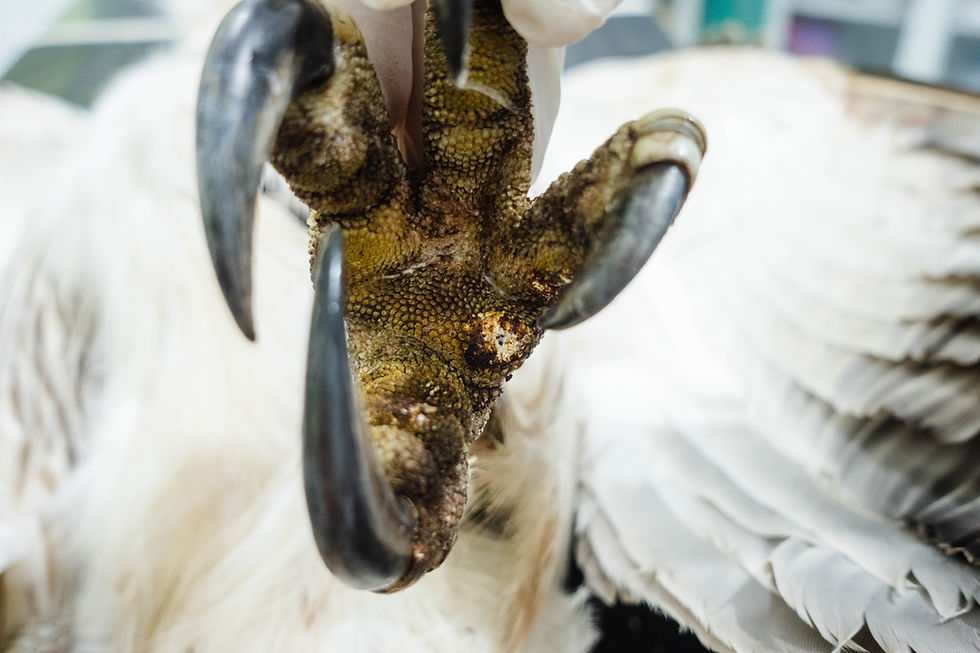
Three days later, on October 4, another young female Philippine Eagle was found dead in Barangay Libertad, Arakan, North Cotabato. Burn marks were found on her left wing and right foot. The veterinary examination confirmed that electrocution caused her death.
Philippine Eagles “Libertad” (left) and “Salay” (right), two young female eagles whose deaths were reported just three days apart in North Cotabato and Misamis Oriental, respectively. Both incidents underscore the vulnerability of young Philippine Eagles to electrical hazards as they move through their natural habitats.
Two eagles. Three days. The same danger.
Philippine Eagles do not stay only deep inside forests. They also fly over farms, roads and villages near or inside their forest habitats.
Young eagles may be more at risk. As they leave their parents’ territories, they often use forest edges and open areas. They are also still learning how to move through the landscape.
To a young eagle, a power pole may not look very different from a tree or another high place to rest.
Why power poles can become deadly
Dr. Andrew Dixon, Director of Science and Conservation at the Mohammed bin Zayed Raptor Conservation Fund, has spent years studying how power lines affect birds of prey.
His work in Mongolia has shown how serious electrocution can become when dangerous power lines cross important raptor habitats. His research has documented large numbers of electrocuted raptors, including threatened Saker Falcons, and has also tested ways to make dangerous poles safer.
“Power infrastructure makes an attractive perch for birds because it’s an elevated site. It gives them a good view of their surroundings.”
For large birds like the Philippine Eagle, their size can make the danger worse.
“What makes them particularly dangerous for eagles is that they have a large wingspan.”
A large eagle can accidentally touch two live parts at the same time. On some pole designs, touching one live wire while also touching a grounded part of the structure can also cause electrocution.
Dr. Dixon’s research in Mongolia did not stop at counting dead birds. His team also tested different ways to reduce electrocution. Some changes to pole design and insulation greatly reduced raptor deaths.
“There are solutions for designing safe lines in the first place, and there are solutions for retrospectively fixing the existing dangerous lines.”
A young eagle beside a known nesting area
The October 4 death in Barangay Libertad is especially worrying because the area is close to the known Philippine Eagle nesting site at Mt. Mahuson in Arakan, North Cotabato.
The Philippine Eagle Foundation first recorded this nesting site in 1995. Since then, at least six nesting attempts that successfully produced young eagles have been validated.

Because Libertad is beside this nesting area, the young female found dead on October 4 could have come from the Mt. Mahuson nesting site or may have been using the nearby landscape after leaving the nest.
This makes powerline safety around known nesting and dispersal areas especially important.

Arakan has seen this before
In 2018, another young Philippine Eagle died after apparently touching two live 220-volt wires on a power pole. A licensed electrical engineer concluded that touching the two energized wires caused the fatal shock.

That death led to action. The Philippine Eagle Foundation, COTELCO and partners began making power lines safer around eagle habitat. In 2023 and 2025, 3 kilometers of a planned 4.5-kilometer retrofit were completed around Mt. Sinaka.
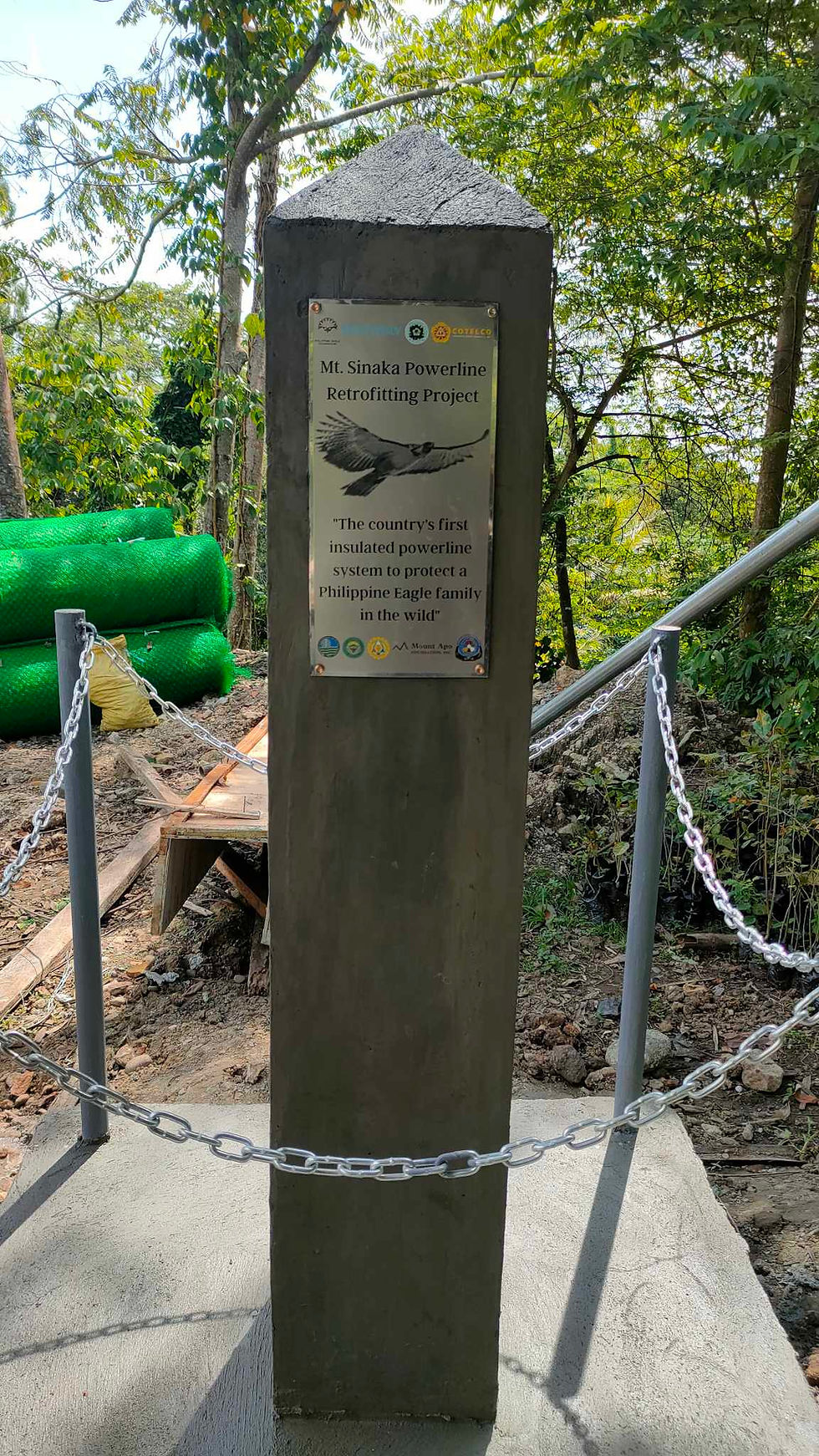
Arakan has already shown that dangerous power lines can be changed.
“These accidents are 100% preventable”
Engr. Imad Kanouni, CEO of Austria-based Midsun IKM, works with power companies on wildlife electrocution prevention.

Midsun IKM develops protective covers and insulation for live wires and other electrical parts. These are used to reduce the risk of birds and other animals touching dangerous electrical points. The company also provides training, technical advice and support for wildlife-protection projects.
“These accidents are 100% preventable.”
He explained that dangerous poles do not always need to be removed. Existing poles can be fitted with protective covers and insulation.
“You can retrofit the electric poles and allow birds to keep using these electrical infrastructures without harm from them, and also without interruption for the service.”
Engr. Kanouni also said his company is willing to help Philippine authorities and power companies develop local solutions.
“We are very open to collaboration with the authorities and to give either training or provide material for pilot projects. We would really love to help the local authorities to prevent these electrocutions.”
This could help start a Philippine Eagle powerline safety program where electric cooperatives, engineers, government agencies, local governments and conservation groups work together to identify dangerous poles and test the best ways to make them safer.
We know what to do
Dr. Jayson C. Ibanez, Director for Operations of the Philippine Eagle Foundation, said the recent deaths should lead to action.
“We should not wait for another dead eagle before checking the next power pole. We know where many of our eagles nest and move, and we know that dangerous poles can be made safer. The next step is to bring conservationists, engineers, electric cooperatives, national government agencies, local governments and communities together to identify high-risk areas and act before another eagle is lost.”
People need electricity. Homes, schools, farms and businesses depend on it.
Protecting Philippine Eagles does not mean removing power lines.
It means making power systems safer in places where power lines and eagle habitats meet.

The next steps are clear: map power lines near known eagle nesting and movement areas, identify dangerous poles, retrofit the highest-risk sites first, and make wildlife-safe designs part of future powerline projects.

Research in Mongolia shows that retrofitting can greatly reduce raptor deaths. Midsun IKM’s work shows that existing power systems can be fitted with protective materials. And Arakan has already shown that local powerline retrofitting can be done.
Two Philippine Eagles died in three days. We should not wait for another one.
Find the dangerous poles. Make them safer. Protect the eagles before another one dies.
Relevant feature:


I am glad I spent time reading this article because it provides a clear and useful explanation of the topic. The writer has covered the important aspects without making the content feel too long or complicated. I liked the logical structure and the practical maan win game details included throughout the discussion. The information is easy to understand and feels relevant to readers. Overall, this is a well-presented article that offers useful knowledge in a simple format.
Help can be given to understand tough ideas, organize them, plan homework, and make academic explanations better. Students can 2048 work through tough parts one step at a time while still meeting the requirements for their study.
Electrocution is a preventable threat. Just like installing automated hospital door systems for critical safety, power lines near habitats need immediate insulation. Protecting these magnificent birds requires urgent action from electric companies.