


PGC Mindanao - UP Mindanao and the Philippine Eagle Foundation map the genetic diversity of the critically endangered Philippine Eagle
Dr. Jayson C. Ibañez

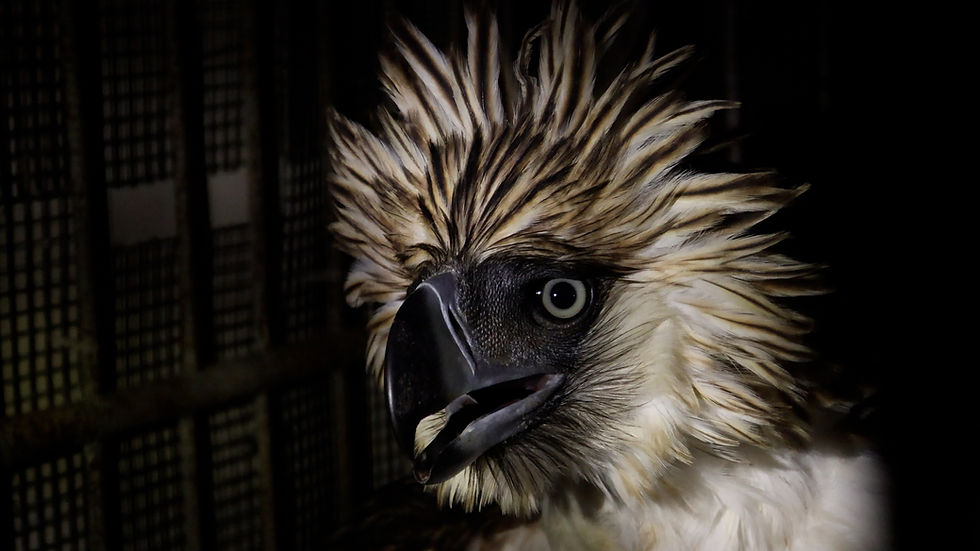
Davao City – Scientists from the University of the Philippines Mindanao–Philippine Genome Center (PGC) and the Philippine Eagle Foundation (PEF) have completed the first mitochondrial genome study of Philippine Eagles from the Greater Mindanao Faunal Region (GMFR), providing new genetic information to guide captive breeding and future releases to the wild.
Published in the open-access journal Ecology and Evolution, the study analyzed mitochondrial genomes from 32 Philippine Eagles housed at PEF’s two facilities in Davao City – the old Philippine Eagle Center (PEC) and the new National Bird Breeding Sanctuary (NBBS). The team found that Philippine Eagles from across the GMFR now share very little genetic variation, confirming how close the species is to extinction.
But the good news: while the species has very low overall nucleotide diversity, the PEF’s collection of captive eagles, those rescued and bred in captivity, still retains a high diversity of maternal lineages (haplotypes), including a few rare bloodlines possessed by those eagles that were bred and hatched in captivity. PEF’s captive-bred birds carry all 17 haplotypes detected in the study, showing that the current breeding stock holds much of the remaining known genetic variation of the species.
The researchers also detected at least two main genetic clusters of Philippine Eagles and identified three particularly distinct haplotypes, including one from Samar Island Natural Park. The results from Samar, together with some key biodiversity areas, such as Mt. Busa–Kiamba, Mt. Kampalili–Puting Bato, and Mt. Pantaron, which showed some genetic uniqueness from other mountains, support geographically important lineages that need to be represented more in the current genetic stock.
The study confirms that the Philippine Eagle is part of the subfamily Circaetinae within the raptor family Accipitridae, together with species like the crested serpent eagle (Spilornis cheela) and Circaetus pectoralis. It also demonstrates how mitochondrial genomes can be used as a practical genetic tool for threatened species where full-genome data are still limited.
What is mitochondrial DNA, and why does it matter for conservation?
Mitochondria are tiny energy-producing parts of a cell, often called its “powerhouses.” Unlike most DNA found inside the cell’s nucleus, mitochondria have their own separate DNA, passed almost entirely from the mother to her offspring. Because mitochondrial DNA (or “mtDNA”) changes slowly over time and is inherited through the maternal line, it is widely used to trace bloodlines or “gene families.”
In conservation genetics, mtDNA helps scientists identify how many unique maternal lineages remain in an endangered species. This is especially important for breeding threatened animals like the Philippine Eagle, where maintaining as many distinct bloodlines as possible can improve genetic health and survival in both captive populations and released birds in the wild.

Direct benefits to captive breeding and releases
Lead author Michael G. Bacus of the Philippine Genome Center Mindanao and the Department of Biological Sciences and Environmental Studies at UP Mindanao explained how the results can directly support conservation breeding.
“Our work shows that even if overall genetic diversity is low, the Philippine Eagle still holds a surprising variety of maternal lineages. By mapping these lineages, the PEF can now secure new genetic stocks from the wild and pair more birds in a smarter way—aiming to keep as much genetic diversity as possible in every chick that hatches,” he said.
UP Mindanao Chancellor Dr. Lyre Anni E. Murao, who is also a co-author and leads wildlife and genomics research at the university, highlighted the role of Mindanao-based science.
“This is an example of how a Mindanao campus, working closely with conservation NGOs, can generate globally relevant science. We are proud that the students and young researchers of the UP Mindanao–PGC are helping decode the genome of our national bird and turning that knowledge into concrete tools for saving it,” she said.

For the Philippine Eagle Foundation, the findings provide a scientific check on decades of captive breeding work and a roadmap for future pairings and releases.
Dennis I. Salvador, Executive Director of the Philippine Eagle Foundation, said, “For years, we have carefully bred eagles using pedigree records and field experience. This study clearly shows that nearly four decades of careful pairing and breeding at the Philippine Eagle Center have produced a healthy mix and preservation of precious haplotypes (bloodlines) ex situ. These insights also show where new genetic stocks can be secured from the wild and can guide us in choosing pairs and release candidates more wisely, so we can keep the gene pool as healthy as possible for the long term as a safety net against extinction.”
National government recognition and policy relevance
Assistant Director Mariglo Rosaida I. Laririt of the Biodiversity Management Bureau (BMB) of the Department of Environment and Natural Resources (DENR) congratulated UP Mindanao–PGC and the PEF for the breakthrough, emphasizing its role in strengthening national efforts to save the Philippine Eagle. “We congratulate the researchers from UP Mindanao–PGC and PEF for advancing a genomic-based study on the Philippine Eagle — such science gives us the critical tools to ensure captive-bred and reintroduced eagles are not only demographically viable but genetically robust. We invite other partners — government agencies, academia, private sector, and communities — to join hands, because only through collective commitment can we achieve the goals of the Philippine Eagle Species Action Plan and support our national and global biodiversity obligations.”
This endorsement links the mitochondrial genome study to the recently approved Philippine Eagle Species Action Plan (PESAP), the country’s updated National Biodiversity Strategy and Action Plan (NBSAP), and global biodiversity frameworks such as the Kunming–Montreal Global Biodiversity Framework.
Expanding genomics collaboration across the UP system
The study also reflects growing collaboration between UP Mindanao, the PEF, and the wider UP system in genomics and biodiversity science.
Dr. Cynthia P. Saloma, Dean of the UP Diliman College of Science, former Executive Director of the Philippine Genome Center, and one of the country’s leading experts in molecular biology and genomics, is not an author of the paper but underscored the national importance of such work and the next steps for genomics.
“The Philippine Eagle is not just a symbol of our forests—it is also a test of our ability to use modern genomics for conservation. This project shows how the Philippine Genome Center network, from Diliman to Mindanao, can support frontline conservation groups like the PEF with high-quality genetic data that directly inform life-or-death decisions for a critically endangered species. Moving forward, the Biodiversity, Ethnicity and Forensics Program of the Philippine Genome Center in UP Diliman will also contribute to this growing use of genomic research to understand and save our national bird through detailed studies of the nuclear genomes of Philippine Eagles.”
Next steps: from mitochondrial to nuclear genomes
The authors stress that mitochondrial data are only one piece of the genetic puzzle. They recommend follow-up studies using nuclear DNA and larger sample sizes from other islands such as Luzon and additional sites in Leyte and Samar to build a more complete picture of the species’ genetic health.
The Philippine Eagle Foundation plans to integrate the new genetic insights into ongoing breeding plans at its new NBBS, including securing, with government permission, new genetic stocks from Samar, the Pantaron Range, Mt. Busa–Kiamba, and Kampalili–Puting Bato, which harbor unique eagle maternal lineages. The results will also guide future reintroduction efforts across Luzon and Leyte islands where eagles were lost but quality habitats still exist.
Link to the full paper: https://tinyurl.com/viewpaper


A strong piece of outerwear can make getting dressed much easier because the rest of the outfit can stay simple. That is probably why bomber and aviation-inspired styles remain so popular. I came across these Avirex Jackets while looking for ideas and found a few really distinctive designs. They have a nice blend of retro and modern streetwear appeal. Definitely useful if you want something more noticeable than a standard jacket.
For anyone building a winter wardrobe, outerwear is probably one of the most important places to start. A comfortable puffer can become your everyday jacket and work across many different outfits. It is worth looking at the fit, overall design, and how easily it can accommodate layers underneath. I came across the north face 700 puffer while checking different winter collections. It offers some useful inspiration for people who prefer classic puffer styling.
It’s interesting to learn why this long-listed bungalow finally sold at a much lower rate than nearby properties after years on the market. For anyone looking to get professional quotes and service details, is a practical choice for business needs A&P gi. The planned residential development on this unique plot also gives a clear view of local real estate developers’ current strategies.
A random post I read earlier included, so I took a moment to check it out. I only spent a short time navigating through it, mainly to understand how things were set up. The layout looks quite organized, and the design feels simple enough Klim Hardanger motorcycle suit to follow. It doesn't take long to get used to where everything is. Even without spending much time, leather motorcycle pants the overall experience feels quite smooth and manageable.
This is a heartfelt reflection on faith, compassion, and the lasting impact of love in our daily lives. Messages like these encourage people to lead with kindness, strengthen their communities, and inspire positive change. Thank you for sharing such cleto reyes gloves meaningful insights during the Lenten season. In a different field, a trusted leather aprons leather hooded jacket for cooking helps contractors build successful projects through accurate planning, detailed estimates, and reliable cost management.