


The Eagle Gets Her Cards
Updated: Jun 9

In Quezon City, an old Philippine Eagle becomes a lesson in citizenship, disability and conservation
On June 4, in a park in Quezon City, an eagle will be given two cards she can never use.
A Ceremony with Two Cards
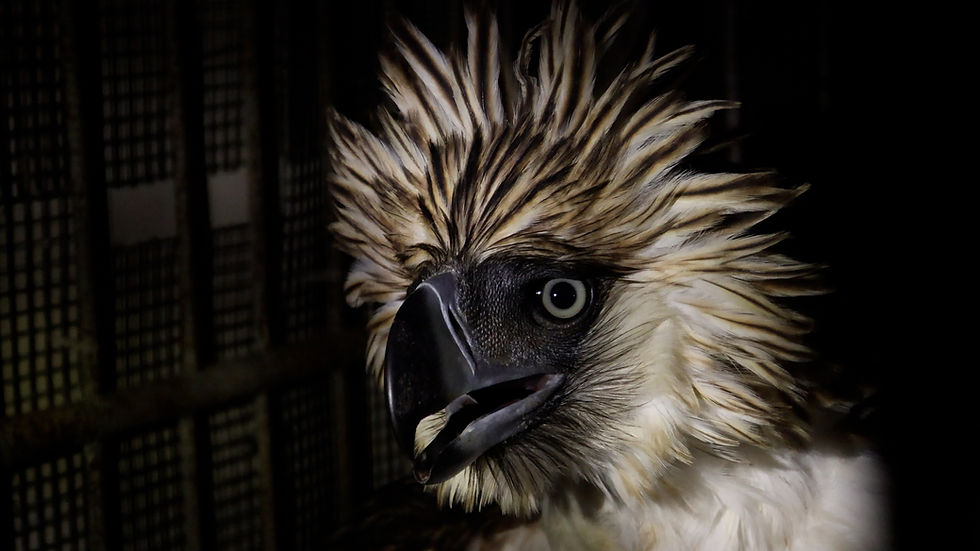
On June 4, in a park in Quezon City, an eagle will be given two cards she can never use. Girlie, a female Philippine Eagle housed at the Ninoy Aquino Parks and Wildlife Center, will be symbolically awarded a Senior Citizen card and a Persons with Disability card by the Quezon City Government. She will not claim discounts on medicine, queue at a government office, or ride public transport. She will not sign forms. She will not know that the ceremony is about her.
But the humans around her will. That is the point.
Girlie is old. At about 46 to 47 years, she is believed to be the oldest known Philippine Eagle in captivity.
The gesture, part of the opening celebration of Philippine Eagle Week 2026, is deliberately unusual. It turns a bureaucratic object—the government-issued identity card—into a conservation message. Girlie is old. At about 46 to 47 years, she is believed to be the oldest known Philippine Eagle in captivity.
She is also partly blind, having lost vision in her right eye from a slingshot injury before she was rescued in 1982. In human terms, she is both elderly and disabled. In ecological terms, she is a survivor of the same pressures that continue to diminish her species: injury, captivity, habitat loss and human indifference.

There is a risk, of course, in giving human categories to wildlife. Animals are not citizens in the legal sense. A raptor does not need paperwork to possess value. Yet the symbolism works because it is both simple and disarming.
It asks the public to look at Girlie not as an exhibit, nor merely as a national bird, but as an individual life with a history. For conservation, that shift matters. Species are saved by policies, budgets and science; but public support is often moved first by stories.
On October 5, 1982, she was brought to a woman in Cagayan de Oro as collateral for a ₱769 loan.
From Collateral to Conservation
Girlie’s story begins in a manner almost too stark for metaphor. On October 5, 1982, she was brought to a woman in Cagayan de Oro as collateral for a ₱769 loan. She was weak and injured, with a wound on her right eye caused by a slingshot. For several days she refused food. Later, she was kept in a cage and fed live snakes and beef.
A report eventually reached authorities. The case was verified by the Bureau of Forest Development Region X, and on December 22, 1982, Girlie was rescued by a team from the then Philippine Eagle Research and Nature Center (PERNC) at Mt. Apo. Six days later, she was flown to Davao City.
A bird built by evolution for the high forest canopy, sharp sight and sovereign flight had been reduced to a wounded captive.
The Damage a Cage Leaves Behind
She arrived in poor condition. Her feathers were dirty and infested with lice. Her wing and tail feathers were bent and damaged. Some head feathers were missing. Her bill bore scars. Taken together, these signs pointed to a long period of miserable conditions inside a cage. A bird built by evolution for the high forest canopy, sharp sight and sovereign flight had been reduced to a wounded captive.
Yet Girlie’s life did not end as evidence in a wildlife case. It became part of Philippine Eagle conservation history.
In 1984, she was paired with a rescued male eagle named Tsai.
A Fertile Egg and a Scientific Opening
In 1984, she was paired with a rescued male eagle named Tsai. Copulation was observed from 1985 to 1986. Then, on December 15–16, 1987, Girlie laid a fertile egg—the first fertile egg recorded in Philippine Eagle captive-breeding history. The egg did not hatch, failing to develop after 17 days. But scientifically, it mattered. It showed that captive pairing and breeding were possible for one of the world’s most difficult raptors to conserve.

That achievement should not be underestimated. The Philippine Eagle is not a bird that lends itself easily to human timetables. It is endemic to the Philippines, occupies vast forest territories and breeds slowly. Each pair represents not just two birds, but a large living landscape: forest cover, prey base, nesting tree, watershed and relative safety from human disturbance.

Finding a nest in the wild can feel like searching for a needle in a haystack; losing an adult can erase years of reproductive potential. In that context, even one fertile egg in captivity was not a small laboratory footnote. It was a sign that science might widen the species’ margin of survival.
Over time, her role changed.
A Useful Exchange
Girlie did not become a prolific breeder. Over time, her role changed. As conservation priorities evolved, and after discussions between the Philippine Eagle Foundation and what was then the Protected Areas and Wildlife Bureau, now the Biodiversity Management Bureau, Girlie was transferred to Quezon City in 2009.
The transfer was made in exchange for Kalinawan, another Philippine Eagle then under BMB care. It proved to be a meaningful exchange for the conservation-breeding program. At the Philippine Eagle Center, Kalinawan later received semen from Pag-asa through cooperative artificial insemination, resulting in the hatching of Mabuhay. Today, Mabuhay carries the combined genetic legacy of Kalinawan and Pag-asa, both of whom have since perished.
Philippine Eagle Mabuhay
Girlie, meanwhile, continued her own contribution in Quezon City as an education ambassador, becoming a living bridge between the public and a species most Filipinos will never see in the wild.
Age has softened her activity.
The Quiet Life of a Survivor
In her enclosure, Girlie is not theatrical. She spends long periods perched on favored branches, resting, watching, grooming and listening. Sometimes she raises her crest, tilts her head or bobs it to focus on something she detects. When disturbed, she may fly from one perch to another, landing with the heavy sound of wings that reminds visitors she remains a territorial eagle, not a mascot.
Age has softened her activity. She now moves less, stays longer on her perch, and on hot days may come down to drink or bathe.
Her relationship with people has also been carefully managed. She was not raised to be affectionate with keepers. Her care was designed to avoid strong human attachment, especially because of early breeding objectives. Feeding, enclosure maintenance and health observation were done with restraint. This distance is important.
According to Dr. Glenn Maguad, Girlie’s veterinarian at the park, Girlie is generally aloof and wary of people, Including Glenn Morales with whom she associates only as her food source. Girlie is fed once daily and is provided with live prey every two weeks to help maintain and practice her natural hunting skills.
She is not tame in the sentimental sense.
Girlie’s calmness should not be mistaken for domestication. She is not tame in the sentimental sense. She is a wild animal living permanently under human responsibility because human injury helped make freedom impossible.
That is the harder message beneath the cards.
Captivity can extend the life of large raptors. Food is regular. Veterinary care is available. There is no hunting, starvation, territorial combat or sudden loss of forest. But captivity is not the ideal that conservation seeks. The forest remains the true measure of success.

A Philippine Eagle belongs above forested ridges, inside a territory large enough to hunt, nest and raise young. Captive care is justified for birds like Girlie because release would likely be fatal. With partial blindness, she cannot be expected to hunt, defend herself and navigate the wild as an apex predator must.
Older birds may no longer produce chicks, but they can still produce public concern.
A Safety Net, not a Substitute
This is why ex situ conservation is often misunderstood. It is not a substitute for protecting forests. It is a safety net for a species whose wild population remains dangerously small. Non-releasable birds may contribute through breeding, research or education. Older birds may no longer produce chicks, but they can still produce public concern. Girlie’s value today lies not in reproduction, but in recognition.
Philippine Eagle Week, observed annually from June 4 to 10, is meant to strengthen awareness and action for the country’s national bird.
This year’s Quezon City opening brings together DENR-BMB, the Philippine Eagle Foundation, the Quezon City Government, Insular Foundation, and the Embassy of the Czech Republic in Manila, along with artists, photographers, senior citizens, persons with disabilities, children and other stakeholders. The Czech Embassy’s support adds an international dimension to the celebration, underscoring that saving the Philippine Eagle is not only a national duty, but also part of a wider global effort to prevent the extinction of irreplaceable wildlife.
That international support is timely.

The Philippine Eagle is a creature of one country, but the problem it represents is universal.
A National Bird, an International Audience
The Philippine Eagle is a creature of one country, but the problem it represents is universal. Around the world, large raptors are disappearing where forests shrink, prey declines and people no longer see wildlife as part of their own future. The presence of the Czech Embassy among the event supporters’ places Girlie’s story within this larger frame: conservation succeeds when local stewardship is strengthened by broader partnerships, scientific exchange and public solidarity.
The program includes talks, exhibits, an art workshop and a mosaic mural activity in which individual painted tiles will form a larger image of Girlie. The metaphor is plain but useful: conservation is assembled piece by piece. Government agencies provide regulation and protected-area management. Foundations provide science, fieldwork and long-term care. Local governments bring public services and civic imagination. Sponsors and international partners help widen the circle of support. Artists and photographers translate technical concern into public feeling. Citizens decide whether concern becomes action.
Many Filipinos understand the dignity owed to elders.
The Obligation Is Not Symbolic
The awarding of Girlie’s Senior Citizen and PWD cards fits that same logic. It is not a legal act but a civic performance. It borrows familiar human language to explain an unfamiliar conservation problem.
Many Filipinos understand the dignity owed to elders. Many understand the accommodation owed to persons with disabilities. The ceremony asks them to extend that instinct toward wildlife—not by pretending animals are human, but by accepting that injured, aging and dependent animals also impose duties on society.
Girlie’s symbolic QCitizen Card transforms a familiar sign of public service into a powerful reminder that injured, aging, and non-releasable wildlife also deserve recognition, care, and collective responsibility.
The cards will be symbolic. The obligation is not.
For Quezon City, the gesture is clever public communication. For DENR-BMB and PEF, it is a way to make ex situ conservation visible without burying the public in technical language. For Insular Foundation and the Czech Embassy, it is an opportunity to support a conservation message that is accessible, inclusive and nationally meaningful. For visitors, it offers a story they can remember.
A wounded eagle was once traded as collateral for a small debt. She survived. She helped prove that captive breeding was possible. She now sits in the capital, old and half-blind, still asking something of the country whose name her species carries.
The cards will be symbolic. The obligation is not.
FILIPINO TRANSLATION
Ang Agila at ang Kaniyang mga Kard
Isang Seremonya, Dalawang Kard
Ngayong June 4, sa Quezon City, isang Philippine Eagle ang bibigyan ng dalawang kard na hindi naman niya kailanman magagamit. Si Girlie, isang babaeng Philippine Eagle na nasa pangangalaga ng Ninoy Aquino Parks and Wildlife Center, ay simbolikong tatanggap ng Senior Citizen card at PWD card mula sa Pamahalaang Lungsod ng Quezon.
Hindi naman siya makakahingi ng discount sa gamot. Hindi pipila sa government office. Hindi sasakay ng jeep o MRT. Hindi pipirma ng dokumento. At hindi niya rin mauunawaan na may seremonyang ginagawa para sa kaniya.
Pero maiintindihan ito ng mga taong makakakita sa kaniya. At iyon talaga ang mahalaga.
Bahagi ito ng pagbubukas ng Philippine Eagle Week 2026, at kakaiba talaga ang mensahe nito. Ginagamit nito ang isang bagay na karaniwan nating inuugnay sa gobyerno at papeles—ang mga ID card—para pag-usapan ang pangangalaga sa kalikasan.
Matanda na si Girlie. Tinatayang nasa 46 hanggang 47 taong gulang na siya, at pinaniniwalaang isa siya sa pinakamatandang Philippine Eagle na nasa pangangalaga ng tao.
Bulag din siya sa kanang mata matapos tamaan ng tirador bago siya nailigtas noong 1982. Sa pananaw ng tao, isa siyang senior citizen na may kapansanan. Sa mundo naman ng conservation, isa siya sa kakaunting nakaligtas sa napakaraming banta sa kanilang uri—pamamaril, pagkabihag, pagkakalbo ng kagubatan, at minsan, kawalang malasakit ng tao.
Totoo, may panganib din kapag masyado nating ikinukumpara ang hayop sa tao. Hindi naman mamamayan ang mga hayop sa legal na kahulugan. Hindi kailangan ni Girlie ng ID para magkaroon ng halaga.
Pero epektibo ang simbolismong ito dahil simple itong maintindihan.
Inaanyayahan tayo nitong tingnan si Girlie hindi lang bilang isang display o pambansang ibon, kundi bilang isang buhay na nilalang na may sariling pinagdaanan. At sa conservation, mahalaga iyon. Dahil kadalasan, bago kumilos ang tao para protektahan ang wildlife, kailangan muna nilang makaramdam ng koneksyon.
Mula sa Pagkasangla Hanggang sa Pagliligtas
Halos hindi kapani-paniwala ang simula ng kuwento ni Girlie.
Noong October 5, 1982, isinangla siya bilang pambayad sa utang na ₱769 sa Cagayan de Oro. Mahina siya noon at sugatan, lalo na sa kanang mata na tinamaan ng tirador. Ilang araw din siyang hindi kumain.
Kalaunan, ikinulong siya at pinakain ng buhay na ahas at karne ng baka.
Nakarating ang balita sa mga awtoridad. Nakumpirma ito ng Bureau of Forest Development Region X, at noong December 22, 1982, nailigtas siya ng grupo mula sa dating Philippine Eagle Research and Nature Center sa Mt. Apo. Makalipas ang ilang araw, inilipad siya papuntang Davao City.
Ang Mga Pinsalang Iniwan ng Pagkabihag
Pagdating niya, halatang matindi ang pinagdaanan niya.
Marumi at puno ng kuto ang kaniyang mga balahibo. Sira at baluktot ang mga balahibo sa pakpak at buntot. May kalbo siyang bahagi sa ulo at may mga peklat ang tuka.
Para sa isang ibong ginawa ng kalikasan para sa matataas na kagubatan at malayang paglipad, malinaw na matagal siyang naghirap sa kulungan.
Pero hindi doon nagtapos ang kuwento niya.
Ang Unang Itlog
Noong 1984, ipinares siya sa isa ring rescued eagle na si Tsai. Pagkatapos ng ilang taon, noong December 1987, nangitlog si Girlie.
Mahalaga iyon dahil iyon ang kauna-unahang itlog na naitala sa captive breeding history ng Philippine Eagle.
Hindi man napisa ang itlog dahil tumigil ang development nito matapos ang 17 araw, malaking bagay pa rin iyon para sa siyensya. Pinatunayan nitong posible ang captive breeding para sa isa sa pinakamahirap paramihin na agila sa buong mundo.
Hindi madaling alagaan o paramihin ang Philippine Eagle. Dito lang ito sa Pilipinas matatagpuan, at kailangan nito ng napakalawak na kagubatan para mabuhay. Ang bawat pares ay nangangailangan ng humigit-kumulang 7,300 ektarya ng forest territory para makapangaso, mamugad, at makapagpalaki ng sisiw.
Kaya sa conservation, kahit isang itlog lang ay napakahalaga.
Isang Mahalagang Papel sa Conservation
Kalaunan, hindi na naging matagumpay ang breeding attempts ni Girlie. Pero hindi ibig sabihin noon ay wala na siyang silbi.
Noong 2009, inilipat siya sa Quezon City matapos ang koordinasyon ng Philippine Eagle Foundation at ng dating Protected Areas and Wildlife Bureau, na ngayon ay Biodiversity Management Bureau.
Kapalit siya noon ni Kalinawan, isa ring Philippine Eagle. Naging mahalaga ang palitang iyon sa conservation breeding program.
Kalaunan, nagkaroon si Kalinawan ng sisiw sa pamamagitan ng artificial insemination gamit ang semilya ni Pag-asa. Ang napisang sisiw ay si Mabuhay, na ngayon ay may dugong mula kina Kalinawan at Pag-asa—dalawang agilang pumanaw na rin kalaunan.
Samantala, ipinagpatuloy naman ni Girlie ang kaniyang papel bilang education ambassador sa Quezon City.
Para sa maraming Pilipino, siya ang nagiging unang pagkakataon para makita nang personal ang isang Philippine Eagle.
Ang Tahimik na Buhay ni Girlie
Sa kaniyang enclosure, tahimik lang si Girlie.
Madalas siyang nakadapo sa paborito niyang sanga—nagpapahinga, nakikinig, o nag-aayos ng balahibo. Minsan itinataas niya ang crest niya o ikinikiling ang ulo kapag may napapansin.
Kapag naiirita o nababahala, lilipat siya ng dapuan, at maririnig ng mga bisita ang bigat ng hampas ng kaniyang malalaking pakpak. Paalala iyon na kahit matanda na siya, isa pa rin siyang mabangis at teritoryal na agila—hindi mascot o alagang hayop.
Mas kalmado na siya ngayon dahil sa edad. Mas matagal na siyang nagpapahinga at mas bihira na ang galaw.
Hindi rin siya pinalaking maging sobrang malapit sa tao. Maingat ang mga tagapag-alaga niya para hindi siya masanay nang todo sa presence ng tao, lalo na noong bahagi pa siya ng breeding program.
At mahalagang maintindihan ito: hindi siya domesticated.
Isa pa rin siyang wild animal na habang-buhay nang nasa pangangalaga ng tao dahil hindi na siya kayang mabuhay muli sa kagubatan.
Salbabida, Hindi Kapalit
Mahabang buhay minsan ang naibibigay ng captivity sa malalaking agila. Regular ang pagkain. May veterinary care. Wala nang mangangaso o mawawalang kagubatan.
Pero hindi iyon ang ultimate goal ng conservation.
Ang totoong sukatan ng tagumpay ay kung may sapat pang kagubatan kung saan malayang makakalipad ang mga Philippine Eagle.
Para sa mga agilang tulad ni Girlie, mahalaga ang captive care dahil malamang hindi na sila mabubuhay kapag pinakawalan muli. Dahil bahagya siyang bulag, maaaring hindi na siya makapangaso o makadepensa sa sarili.
Kaya mahalagang maintindihan na ang ex situ conservation o conservation sa ilalim ng pangangalaga ng tao ay hindi kapalit ng pagprotekta sa kagubatan. Isa lamang itong safety net para sa isang species na kakaunti na lang talaga.
Pambansang Ibon, Pandaigdigang Responsibilidad
Ipinagdiriwang taun-taon ang Philippine Eagle Week tuwing June 4–10 para palakasin ang kamalayan at suporta para sa pambansang ibon ng bansa.
Ngayong taon, kasama sa pagdiriwang ang DENR-BMB, Philippine Eagle Foundation, Quezon City Government, Insular Foundation, at Embassy of the Czech Republic in Manila, pati mga artist, photographer, senior citizens, persons with disabilities, kabataan, at iba’t ibang sektor.
Mahalaga ang suporta mula sa Czech Embassy dahil ipinapakita nitong hindi lang problema ng Pilipinas ang pagkawala ng wildlife. Sa iba’t ibang bansa, unti-unting nawawala rin ang malalaking ibon at iba pang wildlife dahil sa pagkawala ng kagubatan at pagbabago ng kapaligiran.
Kasama sa mga aktibidad ang exhibits, talks, art workshops, at isang mosaic mural activity kung saan bawat kalahok ay pipinta ng tile na magiging bahagi ng mas malaking larawan ni Girlie.
Magandang simbolo iyon ng conservation.
Paisa-isang piraso itong binubuo. May papel ang gobyerno. May papel ang scientists at conservation groups. May papel ang mga partner organizations, artists, media, at ordinaryong mamamayan.
At sa huli, ang tanong ay simple: may malasakit ba tayong kumilos?
Hindi Simboliko ang Responsibilidad
Ang pagbibigay ng Senior Citizen at PWD cards kay Girlie ay hindi legal na hakbang. Isa itong paraan ng pagkukuwento.
Ginagamit nito ang mga bagay na pamilyar sa tao para mas maintindihan ang isang problemang pangkalikasan.
Alam ng mga Pilipino kung paano rumespeto sa matatanda. Alam din natin ang malasakit na dapat ibigay sa mga may kapansanan.
At ngayon, hinihikayat tayong palawakin ang malasakit na iyon para rin sa wildlife—lalo na sa mga hayop na nasaktan, tumanda, at umaasa na sa pangangalaga ng tao dahil sa pinsalang tayo rin ang may gawa.
Minsan, isang sugatang agila lang siya na isinangla para sa maliit na utang.
Ngayon, isa na siyang buhay na paalala ng pagkawala, pag-asa, at pananagutan.
Simboliko man ang mga kard.
Pero hindi simboliko ang ating responsibilidad.


A meaningful story connecting conservation, citizenship, disability, and community awareness beautifully. I would be happy to join the discussion and share my perspective on the topic. A lead management system helps businesses organize prospects, track customer information, manage follow-ups, and maintain structured sales workflows. It provides teams with better visibility into leads, supports timely communication, simplifies customer management, and helps improve overall sales organization and productivity.
This overview highlights the network's emphasis on quality and performance. The company's page effectively communicates its positioning within Asia's advertising ecosystem, making it a relevant resource for potential partners.
This is such a beautifully absurd and poignant gesture—here’s hoping Girlie at least gets a nice perch out of the deal. The symbolism hits harder than any discount ever could. I've been thinking about how we mark meaning for creatures who'll never read the certificate, and it reminds me of a tool that helps track conservation milestones like this o https://animatediff.net
The symbolism is beautiful, even if Girlie will never cash in on those perks—though honestly, she deserves priority seating more than most commuters. Makes you wonder what other "human" honors we project onto creatures that just want a quiet forest, and I've been thinking about that a lot lately. https://video-to-video-ai.com
The symbolism is touching, but Girlie will never know she’s got a discount card she can’t use—maybe that’s the point about how we project our own care onto creatures who just need the forest. I’ve been thinking about how we honor wildlife through human rituals, and it makes me wonder what other gestures we make for animals that are really about us. https://musevideo.site