


Calanasan: The Northern Frontier of Biocultural Discovery

In the remote mountains of Apayao, a quiet municipality is reshaping what is known about Philippine biodiversity, where rare species, new scientific records, and indigenous stewardship converge in one of the Northern Cordillera’s least explored landscapes.
From the rediscovery of long-lost insects to new plants and an active Philippine Eagle nest, Calanasan is emerging as a living laboratory of nature and culture.
In the remote mountains of Calanasan, the forests continue to yield surprises. Some discoveries come draped in feathers, others in petals, scales or iridescent shells. Together they are transforming this quiet municipality in Apayao into one of the country’s most important centres of biocultural diversity.
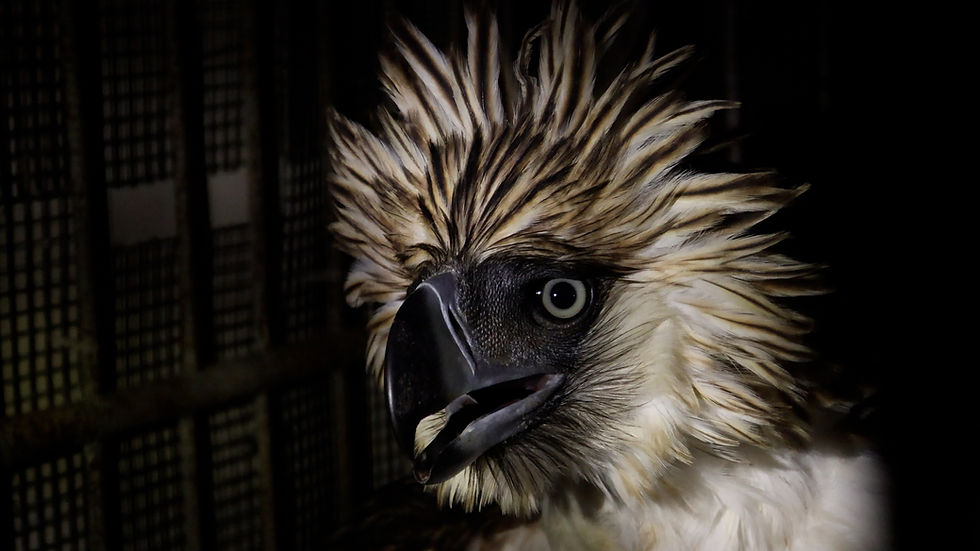
The first major revelation arrived in 2015, when conservationists documented the first active nest of the critically endangered Philippine Eagle ever found on the island of Luzon. The discovery overturned earlier assumptions that, owing to its predominantly pine forests, the Northern Cordillera was unsuitable for Philippine Eagles—a view that overlooked its extensive tracts of intact dipterocarp forest.
Since then, Calanasan has increasingly become a place where scientific discoveries seem less accidental than inevitable.

Botanists recently described Medinilla calanasan, a flowering shrub discovered inside eagle habitat in Barangay Eva. The plant is distinguished by unusual horn-like structures at the base of its leaves, a feature not recorded in related Southeast Asian species. Nearby mountains also yielded Vaccinium kilangensis, a wild blueberry relative named after Mt. Kilang Pass along the Apayao–Ilocos Norte boundary. Together, these findings suggest that the Northern Cordillera’s montane forests remain botanically underexplored.

For botanical specialists, these forests carry a different kind of significance. Pieter B. Pelser, professor at University of Canterbury and co-editor of Co’s Digital Flora of the Philippines, has pointed to discoveries in places like Apayao as evidence that the Philippines remains one of Southeast Asia’s most under-sampled regions for plant biodiversity, where even common assumptions about species distributions are still being revised by fieldwork.

Even the forest’s most unusual plant groups continue to surface. Patrol teams recently documented blooming clusters of Rafflesia lagascae in Calanasan, a species that depends on intact forest ecosystems and large host vines. Its presence is widely interpreted as a sign of ecological continuity.
For Rafflesia, the perspective is similar. Julie Barcelona, research fellow at University of Canterbury and one of the foremost authorities on the genus, has observed that each new population recorded in intact forests reinforces how dependent these plants are on undisturbed ecosystems and long-term ecological stability.
The insects tell a similar story of hidden abundance.
In June 2023, scientists rediscovered the jewel weevil Pseudapocyrtus schadenbergi in Calanasan after an absence of 111 years. The metallic-spotted, flightless beetle had last been recorded in 1912. Its reappearance underscored how little is still known about even conspicuous insect groups in the region.

More recently, ant surveys recorded Aretidris buenaventei in Barangay Eva, marking a new locality record and the lowest known elevation for the genus. For myrmecologists, such records are not minor updates but indicators of a still-unmapped ecological frontier.
“Calanasan continues to affirm its reputation as one of the Northern Cordillera’s important natural frontiers,” notes David General, a recognised authority on Philippine ants. “The recent record of Aretidris buenaventei from Barangay Eva marks both a new locality record and the lowest known elevational record for the genus. For a rarely collected Philippine endemic ant genus, this finding shows how much remains to be discovered in Calanasan’s forests.”
Beetle specialists echo this view. Milton Norman Medina, professor at Davao Oriental State University and co-founder of the Philippine Coleopterists Society, has long emphasized that the Northern Cordillera’s forests likely still harbour a large number of undocumented beetle species, particularly those dependent on intact forest habitats. For coleopterists, landscapes like Calanasan represent not just biodiversity hotspots, but time capsules of evolutionary history still awaiting study.

Another extraordinary species that was found was a forest monitor lizard that appears to be Varanus bitatawa, which herpetologists first thought was confined to the Northern Sierra Madre Mountains. Philippine Eagle Foundation field researchers who were documenting a pair of nesting eagles in Apayao observed one of the adult eagles feeding a freshly hunted bitatawa to its chick. This observation effectively extended the known ecological range of one of the world’s most elusive monitor lizards into the Northern Cordillera, with major conservation implications for the species.

For Arvin Diesmos, director at the ASEAN Centre for Biodiversity and one of the country’s foremost herpetologists, the discovery is hardly surprising given the condition of Calanasan’s forests. After visiting the area and seeing its ancient and relatively pristine habitats firsthand, he noted that the forests of Calanasan likely harbour many undiscovered species of amphibians and reptiles. For field biologists, the forests of Apayao represent a centre of diversity and endemism for Philippine terrestrial biodiversity, one of the few remaining intact landscapes in the Northern Cordillera and on the island of Luzon.
The surprises have extended even to the intimate relationships between species. In 2026, researchers from the Philippine Eagle Foundation documented the first in situ breeding observation in Northern Luzon of the Polillo Forest Frog (Platymantis polillensis) using the pitcher of Nepenthes alata as a nursery for newly metamorphosed froglets. The observation, made in the lowland forests of Apayao, revealed yet another layer of ecological complexity hidden within Calanasan’s forests, where even carnivorous plants can become breeding shelters for endemic frogs.

Yet Calanasan’s story is not only biological. It is also cultural. The forests overlap with ancestral domains of the Isnag people, whose customary “Lapat” system governs hunting, resource use, and protection of sacred and critical habitats. These practices, developed over generations, function in practice as a conservation system that predates formal environmental governance.
This overlap of ecological richness and indigenous stewardship is why Calanasan is increasingly described as a centre of biocultural diversity. In many parts of the world, biodiversity persists in spite of human presence. In Apayao, it persists in part because of it.

For scientists, the implication is simple. The forests of the Northern Cordillera remain far from fully known. For the Philippines, Calanasan stands as a reminder that some of the country’s most significant ecological discoveries are still unfolding—not in archives or collections, but in living landscapes shaped by both nature and culture.

As Mariglo Laririt, assistant director of the Biodiversity Management Bureau of the Department of Environment and Natural Resources, recently emphasized in discussions surrounding the Philippine Biodiversity Strategy and Action Plan (PBSAP), landscapes like Calanasan demonstrate why biodiversity conservation must move beyond isolated protected areas toward whole living landscapes where ecosystems, species, and indigenous communities remain interconnected. In many ways, Calanasan embodies the very future envisioned in the country’s biodiversity agenda: a place where science, culture, conservation, and local stewardship continue to shape one another across generations.


يشرح المقال طريقة الوصول إلى نقط التلاميذ في مسار مع توضيح كيفية التحقق من المواد والنقط الظاهرة، خاصة عند استخدام حساب متمدرس من الهاتف أو الحاسوب.
Шукав ідеї для привітання, а в результаті затримався на цьому вебсайті значно довше. Окрім святкових тем, тут багато статей про кохання, спілкування, народні традиції, сонник і різні питання, які виникають у повсякденному житті.
Когда нужен дополнительный источник информации, можно заглянуть на https://infosaray.com.ua/ru/, где размещены статьи для читателей с разными интересами. Здесь есть как практические материалы, так и публикации для общего развития.
Después de cada sorteo, muchas personas quieren localizar rápidamente los numeros ganadores. Una presentación ordenada facilita esta tarea y permite distinguir diferentes jornadas. También resulta conveniente verificar posteriormente la información para asegurarse de que los números corresponden al sorteo indicado.
Thank you for sharing such an informative article about the constancia de situación fiscal. The information is presented clearly, making it easier to understand why this document is important for different official and employment-related procedures. I will definitely keep this page bookmarked because it is a trustworthy source of useful information.