


CRITICALLY ENDANGERED "LOST" RATTAN REDISCOVERED IN DAVAO DE ORO
By: Dr. Pieter Pelser

A plant photography expedition in the forests of the Mt. Candalaga Range in Maragusan, Davao de Oro, has led to the remarkable rediscovery of one of the Philippines' rarest and most enigmatic palms, Calamus vinosus, a critically endangered rattan species that had not been documented in the wild for more than a century.

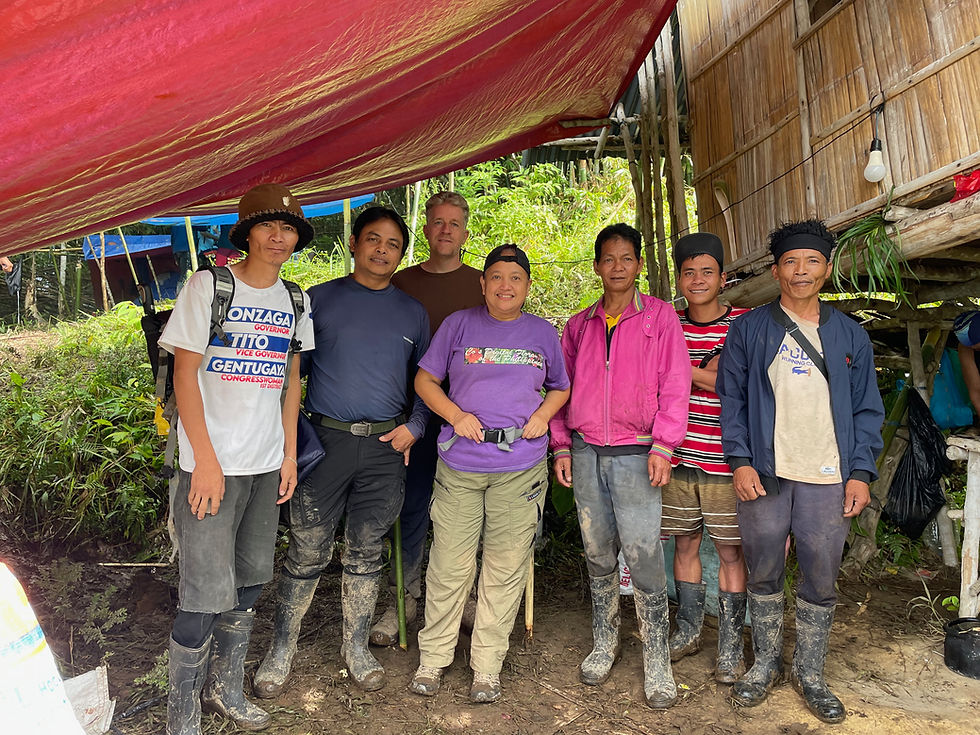
From 26 November to 4 December 2024, Dr. Julie F. Barcelona and Dr. Pieter B. Pelser (School of Biological Sciences, University of Canterbury and Philippine Eagle Foundation), together with Mr. Guiller S. Opiso (Philippine Eagle Foundation), conducted plant photo-documentation fieldwork in the Mt. Candalaga Range. The project aimed to improve our understanding of the habitat of the Philippine Eagle while also documenting the rich plant diversity of Davao de Oro Province.

The fieldwork forms part of an ongoing collaboration between the University of Canterbury and the Philippine Eagle Foundation, combining biodiversity research and conservation efforts in one of the country's most important forest landscapes.
Plant identifications were carried out both during and after the expedition, with valuable assistance from the Co's Digital Flora of the Philippines (CDFP) citizen science community. The work resulted in an impressive collection of 2,271 photographs documenting 236 plant species, all of which are now freely available through the CDFP website (www.philippineplants.org). Many of these species had never before been reported from Davao de Oro Province, significantly expanding knowledge of the region's flora.
Among the most exciting discoveries was the identification of Calamus vinosus by palm expert Mr. Jiro Adorador of the University of the Philippines Los Baños.
"This is an amazing find. I never thought that this species would ever be encountered again in the wild," said Adorador.
Calamus vinosus is a Philippine endemic species classified as Critically Endangered. While approximately 40 species of the rattan genus Calamus are known from the Philippines, C. vinosus is unique in having striking wine-red fruits, making it unlike any other Philippine rattan.

Prior to this discovery, the species was known only from a single collection from 1912 on Mt. Urdaneta in Agusan del Norte. For more than 110 years, no additional records had been made, leaving uncertainty about whether the species still survived in the wild.
The rediscovery of Calamus vinosus highlights both the extraordinary biological richness and the conservation importance of the Mt. Candalaga Range. It also serves as a powerful reminder of how much remains to be learned about the forests of Mindanao and the species they support.

This remarkable finding underscores the urgent need to protect the remaining forests of the Mt. Candalaga Range. These ecosystems are not only vital habitat for the Critically Endangered Philippine Eagle and Rafflesia mira, but also refuge for rare and poorly known plant species that may occur nowhere else on Earth.
As discoveries like this continue to emerge, Mt. Candalaga Range stands as a testament to the Philippines' globally significant biodiversity and the importance of sustained research, collaboration, and conservation to ensure that these natural treasures are not lost.


https://wendische-volkspartei.de is an unusual reference point here, but reading about a species known from a single 1912 collection on Mt. Urdaneta made me think about how much disappears from records simply because no one was looking in the right place at the right time. The wine-red fruits being the one feature that sets C. vinosus apart from roughly 40 other Philippine rattans is a good reminder that identification often hinges on tiny details most of us would walk past. Two thousand plus photos from one expedition says a lot about how much basic botanical work still needs doing.
What an incredible rediscovery—Calamus vinosus looks stunning in its natural habitat! It’s fascinating how plant documentation in Davao de Oro continues to reveal rare biodiversity. Speaking of color, if anyone’s working with field photos affected by strong greenish tones—like those under dense canopy lighting—you might find it helpful to remove a green matcha-style color cast from a photo to better reveal true colors during analysis. Great work to the team!
KKWIN vô tình lọt vào mắt mình lúc đang xem một video về các công cụ hỗ trợ học tập rồi đọc phần thông tin bên dưới. Mình chủ yếu quan sát bố cục địa phương và cách các phần thông tin được đặt trên trang. Tổng thể khá thoáng nên việc xác định từng khu vực không bị mất nhiều thời gian, thao tác chuyển mục cũng phản hồi nhanh. Mình chưa sử dụng lâu nên muốn hỏi thêm các bác đã theo dõi thường xuyên trải nghiệm thực tế thế nào.
Trong lúc xem một số bài thảo luận, mình bắt gặp có người dẫn lại thông tin từ https://98win8v.com/ đặc biệt là về các thông tin có thể thao. Chỉ lướt nhanh tổng thể nên chưa tìm hiểu sâu, nhưng ấn tượng ban đầu là bố cục khá rõ ràng, các phần được chia hợp lý nên nhìn không bị rối mắt. Nội dung hiển thị gọn gàng, dễ theo dõi, thanh menu đặt ở vị trí dễ thấy nên việc chuyển qua lại giữa các mục cũng khá nhanh. Khi truy cập bằng điện thoại, trang vẫn hoạt động ổn định, thao tác mượt. Tổng thể mang cảm giác đơn giản, dễ dùng.
LX88 được mình bắt gặp khá ngẫu nhiên lúc đang đọc một bài chia sẻ kinh nghiệm gửi đồ đi nước ngoài. Mình chủ yếu quan sát bố cục địa phương và cách các phần thông tin được đặt trên trang. Tổng thể khá thoáng nên việc xác định từng khu vực không bị mất nhiều thời gian, thao tác chuyển mục cũng phản hồi nhanh. Mình chưa sử dụng lâu nên muốn hỏi thêm các bác đã theo dõi thường xuyên trải nghiệm thực tế thế nào.