


Two Conservation Legends, One Shared Mission

How Tamaraw and Philippine Eagle Guardians Learn from Each Other?
DAVAO CITY — Across the Philippines, two threatened animals continue to fight for survival.
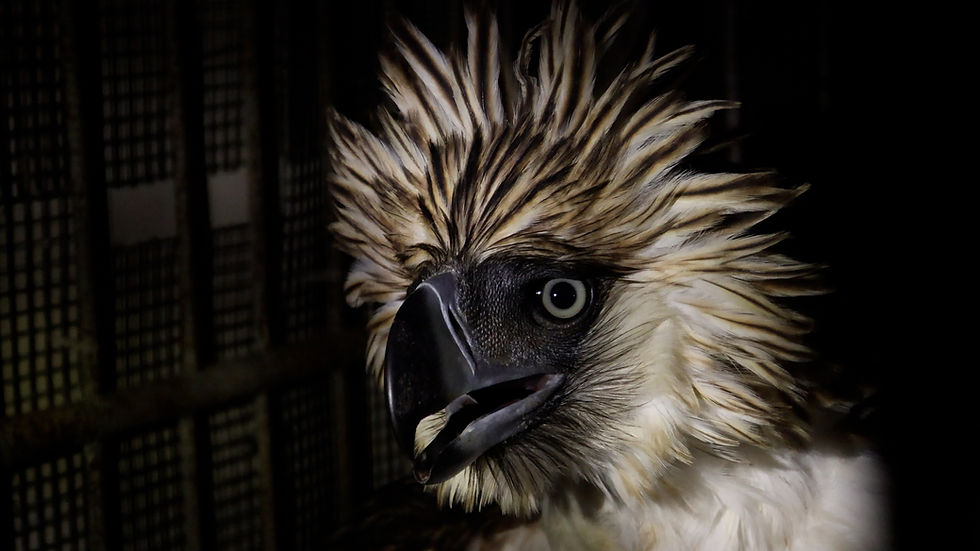
In the forests of Mindanao lives the Philippine Eagle—one of the largest and most powerful eagles in the world. In the mountains of Mindoro roams the tamaraw—a small wild buffalo found nowhere else on Earth.
They live on different islands and face different challenges, but the people protecting them share one goal: to make sure these symbols of Philippine biodiversity survive for future generations.
This shared mission brought together the DENR Tamaraw Conservation Program Office (TCPO) and the Philippine Eagle Foundation (PEF) in Davao City for a strategic benchmarking and learning exchange held from July 7 to 10.

The activity was supported by the DENR Foreign-Assisted and Special Projects Service (FASPS) through the DENR-UNDP/GEF Biodiversity Corridor Project. The project supports conservation efforts in important landscapes across the country, including the Mindoro Biodiversity Corridor for the tamaraw and the Eastern Mindanao Biodiversity Corridor for the Philippine Eagle.
The visit allowed both conservation teams to exchange knowledge, share experiences, and learn new approaches to protecting two of the Philippines' most threatened species.
A Meeting of Two Conservation Veterans
One of the most meaningful moments of the visit was the meeting of two people who have spent much of their lives protecting wildlife.
Domingo "Domeng" Tadena of the Philippine Eagle Foundation and Eduardo "Ed" Bata of the Tamaraw Conservation Program Office have both witnessed the struggles and victories of Philippine conservation.

Domeng helped build the foundation of the Philippine Eagle Foundation's conservation breeding program, which eventually led to the successful hatching of Pag-asa, the first Philippine Eagle bred in captivity in 1992.

Ed Bata, meanwhile, spent decades working in the forests of Mindoro, helping protect the remaining wild population of the tamaraw.

When the two conservation veterans met, they shared stories from the field—of long days in the forest, difficult decisions, unexpected challenges, and moments of hope. Their conversation showed that conservation is not only about science. It is also about dedication, patience, and people who continue the work even when success takes decades.
Learning How to Save the Philippine Eagle
During the visit, the TCPO team spent time at the Philippine Eagle Center (PEC) in Davao City, where they saw Philippine Eagles up close and learned about the many steps involved in saving the species.
The team learned about PEF's work in rescuing injured eagles, providing veterinary care and rehabilitation, maintaining strict biosecurity, and breeding Philippine Eagles under human care.

They also learned about the careful process of raising young eagles—from egg incubation and chick care to preparing birds that may eventually return to the wild.
Seeing the Philippine Eagles in person gave the visitors a deeper appreciation for the species they had come to learn about. Behind every eagle saved is a team of veterinarians, biologists, animal keepers, and conservation workers who provide years of care and expertise.
Restoring Forests for Wildlife
The TCPO delegation also visited the Ayala Land Inc. Davao Carbon Forest, where they saw how damaged landscapes can be restored and transformed into thriving ecosystems.
The project, a partnership between Ayala Land Inc. and the Philippine Eagle Foundation, is an example of how conservation organizations and the private sector can work together to rebuild forests.

Restoration here means more than planting trees. The goal is to build a functional forest—one where wildlife can actually thrive again, with the food, shelter, and natural processes a healthy ecosystem needs. Through science-based restoration, native tree planting, and regular wildlife monitoring, the project tracks how species respond as the habitat recovers, helping ensure the forest is not just growing back, but coming alive again.
The award-winning initiative showed the TCPO team that protecting endangered species is not only about saving animals—it is also about restoring the functional habitats they need to survive.
Learning from Indigenous Forest Guardians
A major lesson from the visit was the importance of working with Indigenous communities who have protected forests for generations.
The TCPO team visited the Mount Apo Natural Park Protected Area Management Office to learn how park managers work closely with Indigenous ancestral domain holders in protecting important Philippine Eagle habitats.

Many historic and active eagle nesting areas are found within ancestral lands, making Indigenous communities important partners in protecting these forests.
The delegation also visited the Bagobo Tagabawa ancestral domain, where they met Indigenous forest guards involved in PEF's forest protection and eagle nest stewardship programs.

These forest guardians patrol their ancestral lands, monitor wildlife, report threats, and help protect Philippine Eagle nesting sites. Their work shows that conservation is strongest when communities are empowered to become protectors of their own forests.
Lessons from Mindoro's Tamaraw Conservation
The visit also highlighted the similarities between Philippine Eagle and tamaraw conservation.
For many years, the Tamaraw Conservation Program Office has worked closely with the Taobuid Mangyan Indigenous Peoples, whose ancestral lands overlap important tamaraw habitats in Mounts Iglit–Baco Natural Park.
Together, TCPO and Taobuid communities help protect tamaraw habitat through forest patrols, wildlife monitoring, fire prevention, and safeguarding of important landscapes.
Conservation partnerships have also expanded with Alangan Mangyan communities in other tamaraw habitats in Mindoro, recognizing Indigenous Peoples as important partners in protecting the forests where tamaraws survive.
Like the Bagobo Tagabawa communities of Mindanao, the Mangyan communities of Mindoro show that local knowledge and stewardship are essential in protecting endangered species.
Different Species, Same Purpose
Throughout the benchmarking activity, both teams exchanged lessons on wildlife monitoring, habitat protection, conservation breeding, veterinary care, environmental education, fundraising, and partnership-building.
Although the Philippine Eagle and tamaraw are very different animals, the challenges they face are often the same—loss of habitat, human threats, limited resources, and the need for long-term commitment.
The visit reminded everyone that conservation is not done by one organization alone.
It is carried by many people: scientists, veterinarians, forest guards, park rangers, Indigenous communities, government partners, donors, and conservation workers who dedicate their lives to protecting nature.

The meeting between Domeng Tadena and Ed Bata was more than a simple exchange of stories. It was a reminder that conservation is built on experience, shared knowledge, and partnerships that cross islands and generations.
From the forests of Mount Apo to the mountains of Mindoro, the message is the same:
Saving wildlife means protecting not only animals, but also the people and landscapes that allow them to survive.


Been trying out Nano Banana for AI image generation lately. You just describe what you want in plain text and it generates something — built on Gemini so the quality is decent. Handles a range of styles from realistic to anime. Useful for quick concept visuals without needing to set up anything locally.
Encontré información interesante sobre delta executor y me pareció útil que los datos estén explicados de manera sencilla. Para cualquier usuario, conocer los requisitos y la compatibilidad antes de utilizar una herramienta puede evitar confusiones. También es recomendable comprobar que la información consultada esté actualizada.
Been using Pico Image for a while now for resizing and compressing images. It runs entirely in the browser so nothing gets uploaded to a server, which I find reassuring. Background removal works pretty well too, saves me from opening heavier software for simple tasks.
Searches for 1.0.0.0.1 may lead users to questions about network addresses and configuration. Providing useful background information helps readers understand the terminology and avoid mixing up similar addresses. A clear, informative approach is more helpful than simply presenting technical details without explaining their context.
This was an insightful and easy-to-read article that provided some genuinely useful information. I especially liked the practical approach, as it made the subject more relatable and helped explain the key points without unnecessary complexity. Students often have to manage coursework, research, and multiple deadlines, so informative resources can be helpful when trying to understand challenging topics. While exploring different academic resources, I also came across HND Assignment Help, which is a relevant resource for students researching HND coursework and study guidance. I appreciate articles that focus on making academic topics easier to understand and encourage learners to develop their knowledge. Overall, this was a worthwhile read, and I hope the blog continues publishing practical and student-focused content like this.…