


Good News, Difficult Truth: Eagle Cleared of Two Viral Diseases, Hidden Pellet Wound Found

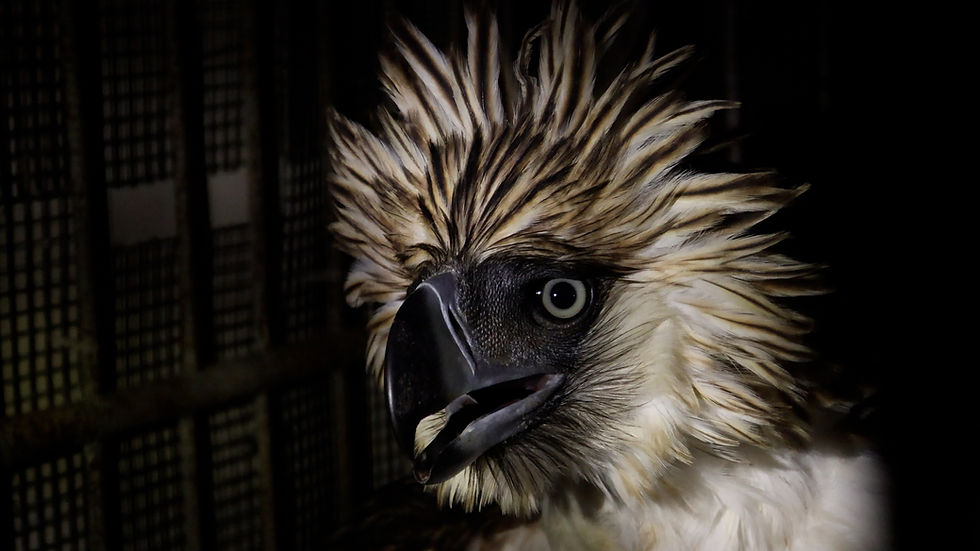
The rescued Philippine Eagle, Sawaga-Dalwangan, continues to show encouraging signs of recovery.
The latest veterinary report says the eagle is more alert and stronger than before. It can also tolerate handling better, allowing the veterinary team to conduct a more complete physical examination. The eagle now weighs 5.60 kilograms.
Laboratory tests conducted by the Bureau of Animal Industry–Regional Animal Disease Diagnostic Laboratory confirmed that Sawaga-Dalwangan tested negative for Avian Influenza and Newcastle disease. This means the eagle had no detectable signs of these two serious and infectious viral diseases at the time of testing.
However, a closer examination found a small wound near the knee joint of the eagle’s left leg. The wound is about 1.5 centimeters long and is located near the second airgun pellet seen in the X-ray. The pellet remains deeply lodged in the leg and cannot be felt from the outside.
The wound had not been noticed during the first examination because the feathers around the eagle’s thigh were heavily covered with mud and dirt.
“When the eagle arrived, it was in extremely critical condition. Our immediate priority was to treat the serious wing injuries, remove the maggots, and stabilize the bird while limiting handling to avoid further stress,” said Dr. Bayani Vandenbroeck, veterinary consultant of the Philippine Eagle Foundation.
“Once the eagle became stronger, we were able to examine it more carefully. After the bird was washed and dried, and as it began cleaning its own feathers again, the wound became easier to see,” he added.

The wound on the left leg was cleaned and treated. It is already forming a scab and showed no active bleeding or signs of infection during the examination.
The wounds on the eagle’s right wing were also cleaned and treated. The surgical wound where the first pellet was removed is healing well. Other shallow wounds under the right wing were also cleaned to remove damaged tissue and support healing.

The wounds near the base of the tail are now clean and free of maggots. However, some dead tissue remains because of the earlier severe maggot infestation. The veterinary team will continue to closely monitor and treat these wounds.

The eagle’s hydration has improved, and it was given 100 milliliters of fluids under the skin before its transfer. It is now eating well when offered prepared prey. It has also been seen preening, or cleaning its feathers, and producing pellets after eating—both encouraging signs of improving health and normal behavior.
After being cleared of Avian Influenza and Newcastle disease, Sawaga-Dalwangan was transferred from Dr. Bayani’s Animal Wellness Clinic to the isolation and rehabilitation facility at the Philippine Eagle Center.

During rehabilitation, the eagle will receive about 300 grams of varied food each day, including rat, rabbit, goat, and guinea pig. It will also receive vitamins and minerals, including calcium, iron, and B-complex vitamins.
Veterinarians and animal keepers will continue to monitor its wounds, food intake, behavior, strength, and ability to fly. Human contact will be kept to a minimum to reduce stress and help the eagle keep its natural wild behavior during recovery.


Tried out Nano Banana 2 for generating images from text descriptions. The updated version feels more responsive and the output quality has improved noticeably. Works well across different styles from photorealistic to illustrated.
Learning about the rescued Philippine Eagle’s health update highlights the vital ongoing efforts in wildlife conservation! Protecting endangered species requires immense dedication and care. Whether supporting environmental causes or unwinding during quiet personal downtime playing engaging 1 Player Games at home, meaningful action inspires hope. Important update!
Been using Nano Banana Pro for AI image generation recently. The Pro version handles more complex prompts and delivers sharper results — still powered by Gemini under the hood. Great for concept art and style experiments without any local setup.
Really moving update on Sawaga‑Dalwangan. Great to see encouraging improvements even with that hidden pellet‑gun injury. Huge admiration for the veterinary and care team for all their dedicated rehabilitation work. Thank you for publishing this honest wildlife rescue progress report. --tryon
When JSON contains deeply nested information, reading the original format can be frustrating. Using json prettify can make the structure much easier to follow. This simple improvement can benefit developers by reducing visual clutter and helping them locate specific keys, values, arrays, or objects more efficiently.