


“Flower of the Mischievous Spirits”: Giant Rafflesia Discovered in Philippine Eagle Forests of Bukidnon
- Mar 21
- 5 min read
Updated: Mar 26

San Fernando, Bukidnon, Philippines — Deep in the rainforests of Mindanao—where Philippine Eagles soar above ancient forests—scientists and Indigenous forest stewards have documented a remarkable botanical treasure: a new sub-population of Rafflesia schadenbergiana, the largest species of Rafflesia in the Philippines and among the largest flowers on Earth.
The discovery was made in the Mt. Sinayawan Range, within the ancestral domain of the Manobo Tigwahanon community of Barangay Kibongcog. The finding expands the known range of this critically endangered plant and highlights the global conservation importance of Indigenous-protected forests in Bukidnon.
Among the Tigwahanon, the extraordinary flower is called “Kuron to Busaw”—the Flower of the Mischievous Spirits. The name reflects local beliefs about mysterious forces that dwell in the forest, fitting for a plant that seems to appear suddenly from the forest floor.

For most of its life, Rafflesia remains hidden inside the tissues of a host vine called Tetrastigma. It has no leaves, stems, or roots. Instead, it lives entirely as a parasite within the vine until its enormous bud bursts open into a massive bloom that lasts only a few days.
When it flowers, Rafflesia schadenbergiana can reach nearly one meter in diameter—about the size of a small coffee table or a car tire. Its thick, reddish petals, speckled with pale spots, spread across the forest floor like a giant starfish before slowly collapsing after several days.
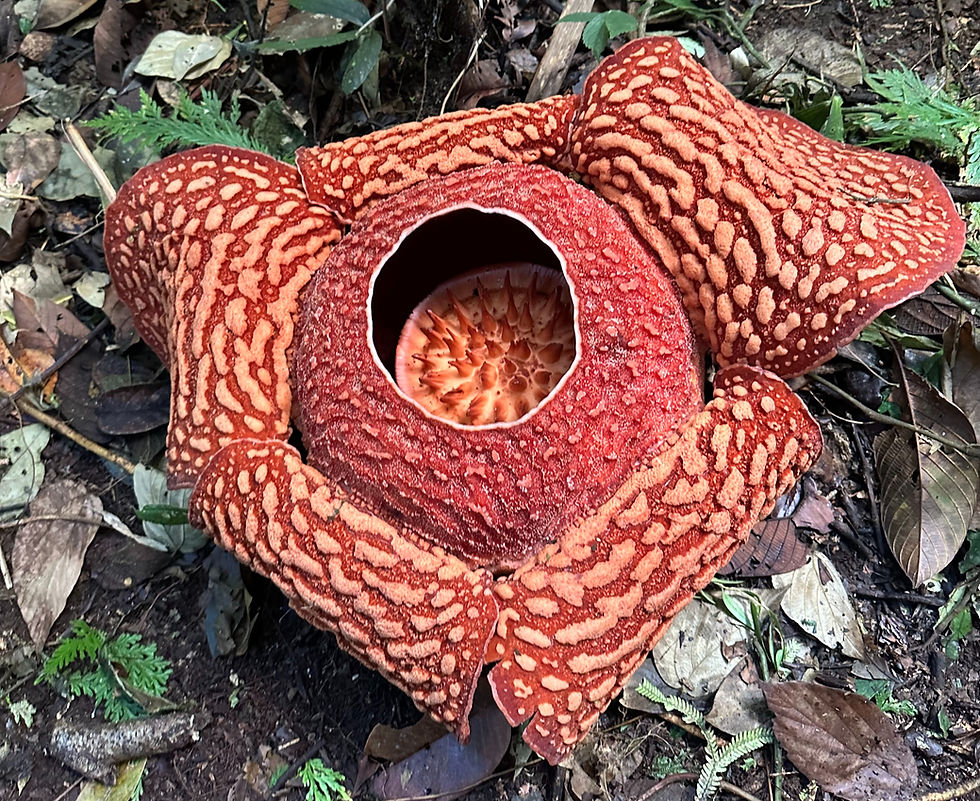
The newly documented site represents a distinct sub-population within the Mt. Sinayawan Range, separate from previously recorded occurrences. A broader distribution record of Rafflesia schadenbergiana in Bukidnon was documented in a 2024 publication in Sylvatrop, The Technical Journal of Philippine Ecosystems and Natural Resources, which highlighted the ecological importance of the region’s mountain forests as refuges for rare and endemic species.
The same Tigwahanon ancestral domain in Kibongkog is also rich in wildlife. Scientists have recorded at least 65 species of forest animals in the area, and 44 of these are found only in the Philippines. This makes the forest not only culturally important, but also globally significant for biodiversity.

University of Canterbury Professor and Botanist Dr Pieter Pelser, an expert on Philippine Rafflesia, emphasized the urgency of protecting the species:
“Rafflesia schadenbergiana is one of the Philippines’ rarest plants and is now critically endangered as tropical rainforests rapidly disappear. Its survival depends on protecting the last forest strongholds, and we honor the Indigenous communities who serve as guardians of the few remaining populations.”
Filipina botanist and taxonomist, Research Associate of University of Canterbury, and Rafflesia authority Julie Barcelona also welcomed the discovery and highlighted its scientific significance.
“Each new population of Rafflesia schadenbergiana reminds us how much biodiversity remains hidden in the Philippines’ forests. These remarkable plants survive only where ecosystems remain intact, making forest protection and Indigenous stewardship essential for their future.”
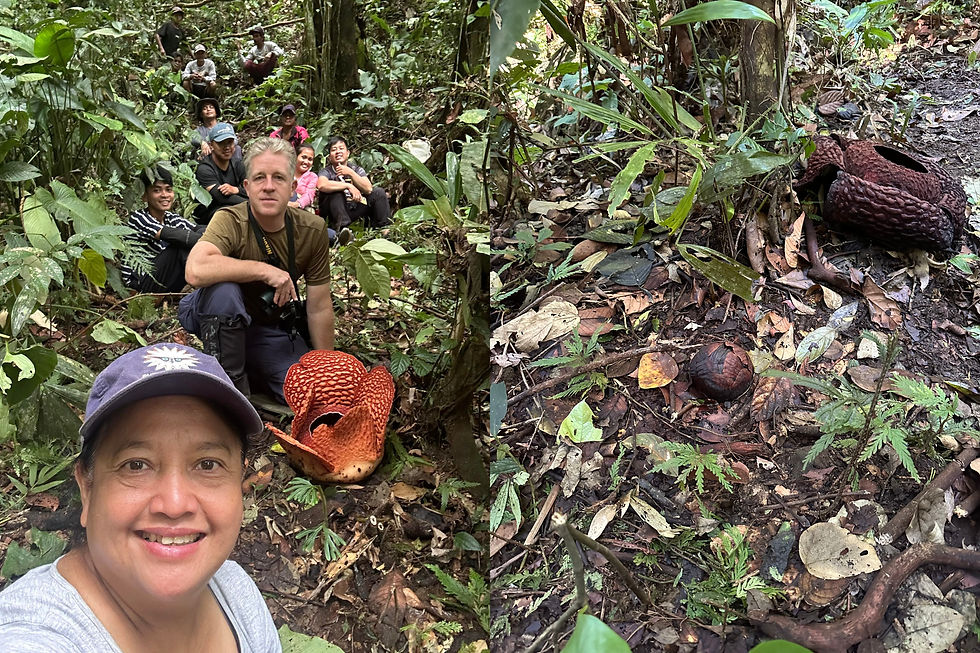
According to Andrei Von Tirona, senior author of the 2024 scientific paper documenting the Bukidnon record, the discovery highlights the importance of partnerships between scientists and Indigenous communities.
“The discovery of another sub-population of Rafflesia schadenbergiana in the Mt. Sinayawan Range shows that these forests still hold remarkable biological secrets. It also highlights how partnerships between scientists and Indigenous communities are essential for finding and protecting some of the rarest species on Earth.”
The discovery was made possible through collaboration with the Manobo Tigwahanon ancestral domain owners of Kibongkog, who serve as both Indigenous researchers and forest guardians.
Community leader and local co-researcher Lovermin Villasis explained the deep cultural meaning of the flower:
“For Tigwahanons, the forest is life. The elders taught us that when we care for the land, the land reveals its gifts. The Kuron to Busaw is one of those gifts—rare and sacred—reminding us that protecting our ancestral domain protects the living world within it.”
Recognizing the ecological importance of the site, the Barangay Local Government Unit of Kibongkog has declared the area a local conservation area. The Tigwahanon community is also working to manage their ancestral domain as an Indigenous and Community Conserved Area (ICCA), strengthening Indigenous leadership in biodiversity conservation.
The forests of the Mt. Sinayawan Range are proving to be an extraordinary refuge for wildlife. The same landscape has recently been documented as home to two newly discovered pairs of the critically endangered Philippine Eagle, further underscoring the global ecological significance of the area.
San Fernando Mayor Rogelio Yeke welcomed the discovery and praised the leadership of the Tigwahanon community:
“This discovery highlights the extraordinary natural heritage of San Fernando. We commend the Tigwahanon community of Barangay Kibongkog for protecting their forests, and the municipal government will continue supporting efforts to conserve these ecosystems for future generations.”
For scientists and Indigenous partners alike, the emergence of Kuron to Busaw carries a powerful message: some of the world’s rarest species still survive where Indigenous communities continue to defend their ancestral lands.
Mr. Dennis Salvador, Executive Director of the Philippine Eagle Foundation, reflected on the deeper meaning of the discovery:
“It is a profound honor for the Philippine Eagle Foundation to help bring this remarkable flower to science alongside our Tigwahanon Indigenous partners. To the Tigwahanon of San Fernando, the Kuron to Busaw grows in forests that are sacred and alive with spirits. To science, the same forests are places where evolution continues to shape rare and extraordinary life."
This discovery reminds us that the forest can be understood in many ways—and when Indigenous wisdom and scientific exploration walk together, we begin to see its deeper truths.”
About the Philippine Eagle Foundation
The Philippine Eagle Foundation (PEF) is a non-profit organization dedicated to conserving the critically endangered Philippine Eagle and its habitat. Founded in 1987, PEF focuses on research, conservation breeding, community-based initiatives, and education programs to protect the species and promote environmental sustainability. PEF collaborates with various stakeholders, including indigenous communities, government agencies, and private sector partners, to ensure the survival of the Philippine Eagle and the preservation of the country’s rich biodiversity.
###
Contacts
Irick Francisco
Communications Officer
Philippine Eagle Foundation


Honestly, seeing the largest rafflesia in Bukid's ecoregion is exciting, but the article makes it sound more dramatic than I thought. I had the chance to visit a nearby forest during my trip to Palawan, and the flower felt more like a giant bud than a chaotic beast. I spent some time on https://fr.trustpilot.com/review/fiablecasino.com and it went a little deeper on this. Overall, the comparison with the local culture of respect for nature added a nice angle.
A Qué Hora Juega La Lotería es un sitio muy útil para quienes buscan información actualizada. En cuanto a tu publicación, espero que pronto encuentres una distribución corregida para el nuevo currículo de Música de primer grado. Gracias por abrir este espacio donde los docentes pueden compartir materiales y apoyarse mutuamente.
This discovery of Rafflesia schadenbergiana in Bukidnon is a significant step for conservation efforts. It's essential to protect such unique flora in their natural habitats. For those interested in unique experiences, check out Nuclear Epoch.
The flower looks really impressive, like a Pokémon character I’ve seen before.
level devil - not a troll game
Wow, discovering the giant Rafflesia in Bukidnon is like finding a hidden treasure! cookie clicker 2 It really reminds me of how nature can surprise us with its wonders. Protecting these habitats is crucial for our biodiversity and future generations!